What Is Digital Marketing for Small Business?
Digital marketing for small business means using online platforms, digital technologies, content, and measurable marketing strategies to attract potential customers, communicate with existing customers, generate leads, and grow revenue.
For a small business, digital marketing can be much more than posting occasionally on social media. A strong approach connects your website, search visibility, social media presence, content, local search, advertising, lead generation, and customer communication into a coordinated system.
Whether you operate a local shop, restaurant, professional service, educational institute, online store, consultancy, startup, or home-based business, digital channels can provide opportunities to reach people who are actively looking for products and services like yours.
Simple Definition
Digital marketing for small businesses is the strategic use of online channels to increase visibility, attract the right audience, build trust, generate leads, convert prospects into customers, and develop long-term customer relationships.
The most effective strategy is not necessarily the one that uses the largest number of platforms. It is the one that focuses on the right audience, the right message, the right channels, and measurable business objectives.
Table of Contents
What Is Digital Marketing for Small Business? Why Digital Marketing Matters Benefits for Small Businesses Digital Marketing Channels Website Marketing SEO for Small Business Local SEO Social Media Marketing Content Marketing Email Marketing Digital Advertising Lead Generation Digital Marketing Strategy Digital Marketing Budget Measuring Results Common Mistakes FAQsWhy Is Digital Marketing Important for Small Businesses?
Customers increasingly use digital channels to discover businesses, research products, compare services, read reviews, and decide where to spend their money. A strong online presence helps a small business participate in those customer journeys.
Increase Online Visibility
Help potential customers discover your business through search engines, social platforms, local search, websites, videos, and useful online content.
Reach Your Target Audience
Digital channels allow businesses to focus their marketing efforts on specific audiences, locations, interests, needs, and search intent.
Generate Leads
Websites, forms, calls, messaging platforms, social media, and landing pages can turn online visitors into potential customers.
Build Credibility
Professional websites, useful content, genuine reviews, consistent branding, and active communication can strengthen customer confidence.
Measure Performance
Digital campaigns can be evaluated using traffic, leads, conversions, engagement, customer acquisition cost, and other meaningful metrics.
Scale Gradually
Small businesses can start with focused activities and increase investment as they identify channels that produce meaningful results.
Benefits of Digital Marketing for Small Businesses
A well-planned digital marketing strategy can support different business objectives, from brand awareness and customer acquisition to retention and long-term growth.
Reach Customers Beyond Your Location
Digital channels can help a business reach customers outside its immediate physical area when its products or services support broader markets.
Compete Through Expertise
Helpful guides, educational content, case studies, videos, and demonstrations can help smaller brands establish authority within their niche.
Create Direct Customer Relationships
Social media, email, messaging, and websites can give small businesses direct ways to communicate with customers.
Improve Customer Acquisition
Combining search, content, social media, advertising, and conversion optimization can create multiple paths for potential customers to discover a business.
Build Long-Term Brand Awareness
Consistent online communication can help a business remain visible and recognizable to its target audience.
Support Repeat Business
Digital communication can continue after the first purchase, helping businesses maintain relationships with existing customers.
The Most Important Digital Marketing Channels for Small Business
Small businesses do not need to master every digital channel at once. Start with the channels most closely connected to your audience and business goals.
| Channel | What It Does | Best Used For |
|---|---|---|
| Website | Provides your central online presence and conversion destination. | Information, credibility, leads, sales |
| SEO | Improves visibility for relevant search queries. | Organic traffic and long-term visibility |
| Local SEO | Helps location-based businesses appear in local searches. | Local customers and foot traffic |
| Social Media | Builds awareness, engagement, communication, and community. | Brand awareness and engagement |
| Content Marketing | Provides useful information that attracts and educates audiences. | Trust, SEO, education, authority |
| Email Marketing | Maintains direct communication with prospects and customers. | Nurturing and retention |
| Digital Advertising | Provides paid exposure to targeted audiences. | Faster reach, leads, sales, testing |
Build a Professional Website for Your Small Business
Your website can serve as the central destination for your digital marketing activities. Social media posts, search results, advertisements, email campaigns, and other channels can direct interested people to relevant website pages.
A small business website should clearly explain what you offer, who you serve, why customers should trust you, and what visitors should do next.
Small Business Website Checklist
SEO for Small Business
Search engine optimization can help small businesses become more visible when potential customers search for relevant products, services, questions, or solutions.
Instead of focusing only on a single high-volume keyword, build useful pages around the topics, services, questions, locations, and problems that matter to your customers.
Small Business SEO Priorities
Local SEO: A Powerful Digital Marketing Strategy for Local Businesses
If customers visit your location or search for businesses within a specific area, local SEO should be an important part of your digital marketing strategy.
Local Search
Optimize your online presence for searches containing locations, neighborhoods, cities, and nearby intent.
Business Profiles
Maintain accurate business information across important online platforms and local directories.
Reviews
Encourage genuine customer feedback and respond professionally to reviews.
Location Pages
Create useful location-specific pages when your business genuinely serves multiple areas.
Content Marketing for Small Businesses
Content marketing helps businesses answer customer questions, demonstrate expertise, support SEO, and build relationships before a customer is ready to buy.
Blog Articles
Answer customer questions and target relevant informational searches with genuinely useful articles.
Video Content
Demonstrate products, explain services, answer questions, and show the human side of your business.
Guides
Create comprehensive resources that help customers understand their options and make informed decisions.
FAQ Content
Address common questions about pricing, products, services, processes, delivery, availability, and customer requirements.
Case Studies
Show how your business has helped customers while providing practical evidence of your expertise and capabilities.
Email Marketing for Small Businesses
Email marketing can provide a direct communication channel with customers and people who have voluntarily subscribed to receive information from your business.
Useful newsletters, educational content, product updates, announcements, and relevant offers can help maintain customer relationships.
Email Marketing Ideas
Digital Advertising for Small Business
Paid advertising can help small businesses reach targeted audiences faster than relying exclusively on organic visibility. However, advertising should be connected to clear objectives and measurable conversion paths.
Search Advertising
Reach people actively searching for products or services related to your business.
Social Advertising
Promote content, offers, products, services, or lead generation campaigns to relevant audiences.
Remarketing
Reconnect with eligible audiences who have previously interacted with your business.
Turn Digital Visibility Into Business Leads
Getting visitors to your website is only one part of digital marketing. Small businesses also need clear paths that allow interested people to contact them, request information, book appointments, request quotes, or make purchases.
Your conversion process should be simple and appropriate for the customer's intent.
Lead Generation Opportunities
How to Build a Digital Marketing Strategy for a Small Business
A strategy gives your marketing activities direction. Instead of publishing random posts or running disconnected campaigns, define your audience, goals, channels, content, conversion process, and measurement framework.
Define Your Business Goals
Decide what you want digital marketing to achieve. Examples include increasing inquiries, generating qualified leads, increasing online sales, improving local visibility, or building brand awareness.
Understand Your Target Audience
Identify who your ideal customers are, what problems they experience, what they search for, what influences their decisions, and where they spend time online.
Research Search Intent and Competition
Understand what your customers search for and analyze competing businesses to identify useful opportunities for differentiation.
Build or Improve Your Website
Create clear pages for your products, services, locations, solutions, and important customer questions. Make the website easy to navigate and use on mobile devices.
Select the Right Digital Channels
Prioritize the channels where your target customers are most likely to discover, evaluate, and communicate with your business.
Create Useful Content
Develop content that answers questions, demonstrates expertise, addresses customer concerns, and supports your business goals.
Create a Conversion System
Make it easy for visitors to contact your business, request a quote, book a consultation, purchase a product, or take another meaningful action.
Measure and Improve
Monitor meaningful results and continuously improve pages, content, campaigns, offers, and customer experiences based on evidence.
Digital Marketing for Different Types of Small Businesses
The best digital marketing approach depends on what the business sells, who it serves, where customers are located, and how customers make purchasing decisions.
Local Shops
Focus on local SEO, business listings, social media, customer reviews, location pages, and local offers.
Restaurants
Use local search, menus, visual content, social media, customer reviews, and location-based campaigns.
Service Businesses
Focus on service pages, SEO, case studies, testimonials, lead forms, calls, and consultation requests.
E-Commerce Stores
Combine product SEO, content, social media, advertising, email, conversion optimization, and retention.
Educational Institutes
Use educational content, search visibility, social media, landing pages, lead generation, and student-focused communication.
Consultants
Demonstrate expertise through articles, videos, case studies, professional profiles, and consultation pages.
Startups
Build awareness, educate the market, validate messaging, generate early leads, and develop a scalable acquisition system.
Home-Based Businesses
Use a focused website, social media, local search where appropriate, referrals, content, and direct communication.
How Much Should a Small Business Spend on Digital Marketing?
There is no universal digital marketing budget that works for every small business. The right investment depends on revenue, margins, competition, customer acquisition economics, market size, business goals, and available internal resources.
A practical approach is to begin with a focused strategy, establish measurement, identify channels that generate meaningful results, and then increase investment based on performance.
Before Increasing Your Marketing Budget
How to Measure Digital Marketing Success
Avoid measuring your entire strategy by follower counts or website traffic alone. Focus on metrics connected to your actual business objectives.
Visibility
Search visibility, impressions, reach, branded searches, and relevant website traffic.
Engagement
Content engagement, interactions, returning visitors, video engagement, and meaningful social activity.
Leads
Inquiries, calls, quote requests, consultation bookings, registrations, and qualified prospects.
Revenue
Purchases, sales revenue, customer acquisition cost, conversion rate, repeat purchases, and customer value.
A Simple 90-Day Digital Marketing Plan for Small Business
Small businesses can avoid trying to implement everything at once. A phased approach makes it easier to build a strong foundation, publish useful content, and measure progress.
Days 1–30: Build the Foundation
Days 31–60: Create Visibility
Days 61–90: Generate & Optimize
Common Digital Marketing Mistakes Small Businesses Should Avoid
Digital Marketing for Small Business FAQs
Answers to common questions about using digital marketing to grow a small business.
What is digital marketing for small business?
Why is digital marketing important for small businesses?
What is the best digital marketing strategy for a small business?
How can a small business use SEO?
Is social media marketing useful for small businesses?
How can a small business generate leads online?
How much does digital marketing cost for a small business?
How long does digital marketing take to produce results?
Can a small business do digital marketing without a large budget?
Explore More Digital Marketing Topics
Build your knowledge of the strategies and channels that can help businesses establish a stronger digital presence.
Ready to Grow Your Small Business With Digital Marketing?
Build a stronger online presence with a practical strategy that combines SEO, content, social media, local visibility, lead generation, and conversion optimization around your business goals.
Talk to Creators Pakistan
What Is Digital Marketing?
Learn how digital marketing uses websites, search engines, social media, content, email, and online advertising to reach customers, build brand awareness, generate leads, and grow businesses effectively.
Book Demo Contact Us Read More
Digital Marketing Strategy
Discover how to create a focused digital marketing strategy by defining your audience, setting goals, selecting the right channels, creating content, and measuring results for continuous business growth.
Book Demo Contact Us Read More
Digital Marketing Funnel
Understand the digital marketing funnel from awareness to consideration, conversion, and retention. Learn how businesses guide potential customers through each stage toward becoming loyal customers.
Book Demo Contact Us Read More
Digital Marketing for Small Business
Learn practical digital marketing techniques for small businesses to increase visibility, attract local customers, build online credibility, generate leads, and compete effectively with larger businesses.
Book Demo Contact Us Read More
Digital Marketing for Startups
Discover cost-effective digital marketing strategies for startups, including SEO, social media, content marketing, email campaigns, and paid advertising to build awareness and acquire customers.
Book Demo Contact Us Read More
Digital Marketing for Local Businesses
Learn how local businesses can use SEO, Google Business Profile, social media, online reviews, and local advertising to increase visibility and attract more customers from nearby areas.
Book Demo Contact Us Read More
Digital Marketing for Restaurants
Explore digital marketing strategies for restaurants to promote menus, attract local customers, increase online orders, build reviews, and create engaging social media content that drives visits.
Book Demo Contact Us Read More
Digital Marketing for Real Estate
Learn how real estate businesses can use SEO, social media, content, paid advertising, property listings, and lead generation campaigns to attract qualified buyers, sellers, and investors.
Book Demo Contact Us Read More
Digital Marketing for E-commerce
Discover strategies for growing an e-commerce business through SEO, product content, social media, email marketing, paid advertising, conversion optimization, and customer retention campaigns.
Book Demo Contact Us Read More
SEO vs Digital Marketing
Understand the difference between SEO and digital marketing. SEO focuses primarily on organic search visibility, while digital marketing includes SEO along with social media, advertising, email, content, and other channels.
Book Demo Contact Us Read More
Digital Marketing vs Traditional Marketing
Compare digital and traditional marketing approaches, including their reach, targeting, cost, measurement, flexibility, and customer engagement, to understand which methods best support modern business growth.
Book Demo Contact Us Read More
Digital Marketing Channels
Explore important digital marketing channels including SEO, social media, content marketing, email marketing, websites, online advertising, influencer marketing, and local search to reach customers effectively.
Book Demo Contact Us Read More
Digital Marketing KPIs
Learn how to measure digital marketing performance using key performance indicators such as traffic, engagement, leads, conversion rate, customer acquisition cost, click-through rate, and revenue.
Book Demo Contact Us Read More
Digital Marketing Budget
Understand how to plan and allocate a digital marketing budget across SEO, content, social media, advertising, email, and other channels while balancing business goals, resources, and expected results.
Book Demo Contact Us Read More
Digital Marketing ROI
Learn how to calculate and improve digital marketing return on investment by comparing campaign costs with generated revenue, leads, conversions, and other measurable business outcomes.
Book Demo Contact Us Read More
Digital Marketing Trends
Stay updated with important digital marketing trends, including AI-powered marketing, short-form video, personalized content, social commerce, voice search, automation, and data-driven customer experiences.
Book Demo Contact Us Read More
How to Create a Digital Marketing Plan
Learn how to build a practical digital marketing plan by defining objectives, identifying your target audience, selecting channels, planning content, setting budgets, and establishing measurable KPIs.
Book Demo Contact Us Read More
How SEO Supports Digital Marketing
Understand how SEO strengthens digital marketing by improving organic visibility, attracting targeted website traffic, building online authority, generating leads, and delivering long-term growth without relying entirely on paid advertising.
Book Demo Contact Us Read More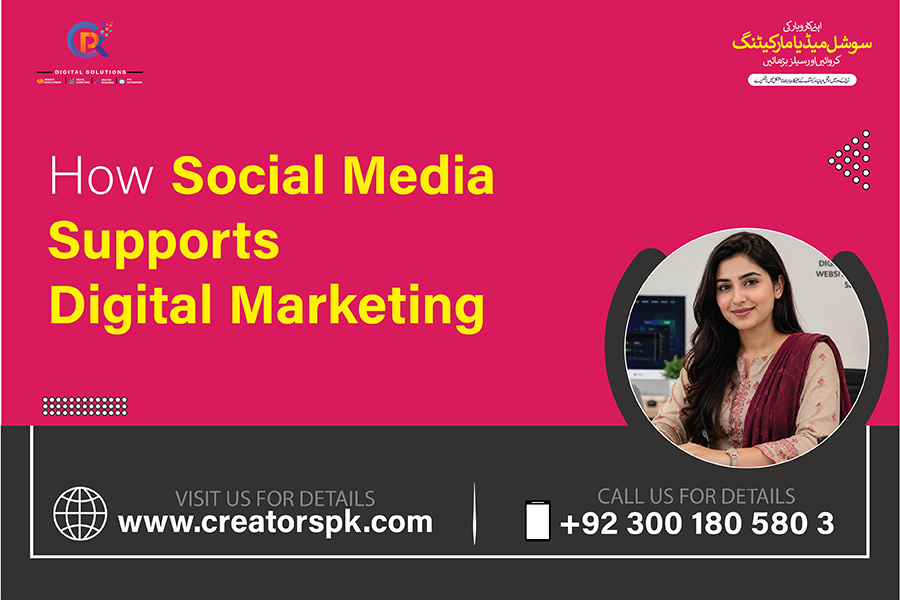
How Social Media Supports Digital Marketing
Learn how social media supports digital marketing by increasing brand awareness, engaging customers, distributing content, generating leads, building communities, and driving traffic to websites and online stores.
Book Demo Contact Us Read MoreWe Create Digital Solutions That Grow Your Business
Website Development | SEO | Digital Marketing | Branding
Get Free Consultation
Use Social Media to Build Awareness and Relationships
Social media can help small businesses show their products, demonstrate expertise, share useful information, communicate with customers, and build a recognizable brand.
The objective should not simply be to collect followers. Focus on reaching the right audience and creating content that encourages meaningful engagement and business actions.
Social Media Content Ideas