Understand the difference between SEO and digital marketing, how they work together, which channels they use, their benefits, and how businesses can build a complete online marketing strategy.
SEO is a specific digital marketing discipline focused on improving organic search visibility.
Digital marketing is the broader approach that includes SEO plus social media, advertising, content, email, conversion optimization, and other online marketing activities.
SEO VS DIGITAL MARKETING
When businesses begin building an online presence, they often hear the terms SEO and digital marketing used together. Although these concepts are closely connected, they are not exactly the same.
Search Engine Optimization (SEO) is a specialized digital marketing discipline that focuses on improving the visibility of web pages in organic search results. SEO can involve technical improvements, content optimization, keyword research, internal linking, structured data, and other practices designed to help search engines understand and surface useful content.
Digital marketing is a much broader concept. It covers the use of digital channels to reach, engage, convert, and retain customers. These channels can include SEO, social media marketing, content marketing, email marketing, paid advertising, influencer marketing, online reputation management, conversion optimization, analytics, and more.
SEO is part of digital marketing. Digital marketing is the larger umbrella that can include SEO and many other strategies and channels.
SEO stands for Search Engine Optimization. It is the process of improving web pages and websites to help them become more visible and useful in organic search results.
SEO is primarily concerned with search visibility and attracting relevant visitors from unpaid search results.
For example, an online store selling shoes might use SEO to optimize its category pages, product pages, guides, website structure, and content for searches related to shoes and customer needs.
Digital marketing is the broader practice of using digital technologies, platforms, and communication channels to promote products, services, brands, and businesses.
It can cover the complete customer journey — from creating awareness and attracting visitors to generating leads, making sales, building relationships, and retaining customers.
SEO is therefore one important component within the larger digital marketing ecosystem.
SIDE-BY-SIDE COMPARISON
SEO and digital marketing are connected, but they differ in scope, channels, objectives, implementation, and measurement.
| Factor | SEO | Digital Marketing |
|---|---|---|
| Definition | Optimization for organic search visibility. | Broad use of digital channels for marketing. |
| Scope | Specialized discipline. | Broad marketing ecosystem. |
| Main Focus | Organic search visibility and relevant traffic. | Awareness, traffic, leads, sales, engagement, and retention. |
| Paid Advertising | Not the primary focus. | Can be a major component. |
| Social Media | Not a core SEO channel. | Major marketing channel. |
| Content | Content is optimized around search intent and usefulness. | Content can serve awareness, engagement, SEO, education, and conversion. |
| Not a core SEO activity. | Important retention and communication channel. | |
| Time Horizon | Often developed as a long-term organic strategy. | Can include both short-term and long-term campaigns. |
| Measurement | Rankings, organic visibility, clicks, traffic, and conversions. | Traffic, engagement, leads, sales, conversions, CAC, ROI, and other metrics. |
| Relationship | One component of digital marketing. | Broader discipline that can include SEO. |
THE BIG PICTURE
SEO should not always be treated as a completely separate activity. It can work alongside other digital marketing channels to support the entire customer journey.
Helps people discover useful business content through relevant organic searches.
Helps brands communicate with audiences, distribute content, and build communities.
Helps businesses reach targeted audiences through paid digital campaigns.
Helps businesses understand performance and make data-informed marketing decisions.
Content created for SEO can also support social media, email campaigns, sales enablement, customer education, and other marketing activities.
DIGITAL MARKETING ECOSYSTEM
Digital marketing can combine multiple channels depending on the business model, audience, goals, resources, and customer journey.
Build organic search visibility through technical, content, on-page, off-page, and local SEO activities.
Use social platforms to create awareness, distribute content, communicate with audiences, and support business objectives.
Create useful articles, guides, videos, visuals, case studies, and educational resources.
Use paid search, social, display, video, and other advertising formats to reach relevant audiences.
Build permission-based relationships through useful email communication, campaigns, and customer retention.
Improve landing pages, websites, forms, calls-to-action, checkout processes, and customer journeys.
SEO FRAMEWORK
SEO itself contains multiple areas of optimization. Understanding these areas helps businesses develop a more complete search strategy.
Focuses on technical aspects such as crawling, indexing, website architecture, performance, mobile usability, and structured data.
Optimizes page content, headings, titles, descriptions, URLs, internal links, images, and search intent.
Creates useful, relevant, comprehensive content designed to satisfy user needs and appropriate search intent.
Helps businesses improve visibility for relevant searches with local intent.
SEO BENEFITS
Improve opportunities for relevant users to discover your website through organic search.
Target searches that align with your products, services, expertise, and customer needs.
Useful SEO content can continue attracting visitors after publication when it remains relevant.
Organic visibility, clicks, traffic, conversions, and other indicators can be monitored over time.
DIGITAL MARKETING BENEFITS
Digital channels can help businesses reach specific audiences based on relevant characteristics and behavior.
Businesses can combine SEO, social media, advertising, email, content, and other channels.
Campaigns can be evaluated using traffic, engagement, leads, conversions, revenue, and other metrics.
Social platforms and digital communication tools allow businesses to interact directly with customers.
Email, remarketing, content, and customer communities can support long-term relationships.
Digital channels can enable businesses to reach audiences beyond their traditional geographic market.
INTEGRATED APPROACH
Instead of choosing SEO or digital marketing as competing options, businesses can integrate SEO into a broader digital marketing strategy.
Determine whether your priority is awareness, organic visibility, leads, online sales, customer retention, or another measurable business outcome.
Research your target customers, their problems, questions, search behavior, preferences, objections, and buying journey.
Improve website structure, technical performance, content, search intent alignment, internal links, and other SEO fundamentals.
Develop useful articles, guides, videos, landing pages, case studies, and resources that support both SEO and broader marketing goals.
Distribute relevant content through social media, email, communities, partnerships, and appropriate paid campaigns.
Analyze traffic, engagement, leads, conversions, rankings, and other meaningful indicators to improve marketing performance.
BUSINESS DECISION
The question should not usually be whether SEO is better than digital marketing because SEO itself is a component of digital marketing.
AVOID THESE ERRORS
Businesses sometimes focus too heavily on individual channels instead of building a connected marketing system.
BUSINESS APPLICATIONS
The right mix of SEO and digital marketing channels depends on the industry, audience, customer journey, competition, and business goals.
Local SEO, content, social media, Google Business Profile optimization, and targeted advertising can support customer acquisition.
Product SEO, category SEO, content, social media, shopping campaigns, remarketing, email, and conversion optimization can work together.
Local SEO, property content, lead generation, paid campaigns, landing pages, and social media can support property inquiries.
Local search visibility, social media, reviews, content, advertising, and location-based campaigns can support restaurant discovery.
KEY TAKEAWAY
SEO is one of the most important components of digital marketing. While SEO focuses primarily on organic search visibility, digital marketing encompasses a much wider range of channels and activities used to reach and engage customers online.
Businesses can create stronger marketing systems by combining SEO with useful content, social media, paid advertising, email marketing, conversion optimization, analytics, and customer retention.
FREQUENTLY ASKED QUESTIONS
BUILD A STRONGER ONLINE PRESENCE
Creators Pakistan helps businesses develop practical digital marketing strategies covering SEO, social media marketing, content marketing, website development, digital advertising, lead generation, and conversion optimization.
Contact Creators PakistanCONTINUE LEARNING
Explore related digital marketing topics to understand how different online marketing channels work together to help businesses build visibility, generate leads, and grow.
Learn how digital marketing uses websites, search engines, social media, content, email, and online advertising to reach customers, build brand awareness, generate leads, and grow businesses effectively.
Book Demo Contact Us Read More
Discover how to create a focused digital marketing strategy by defining your audience, setting goals, selecting the right channels, creating content, and measuring results for continuous business growth.
Book Demo Contact Us Read More

Understand the digital marketing funnel from awareness to consideration, conversion, and retention. Learn how businesses guide potential customers through each stage toward becoming loyal customers.
Book Demo Contact Us Read More
Learn practical digital marketing techniques for small businesses to increase visibility, attract local customers, build online credibility, generate leads, and compete effectively with larger businesses.
Book Demo Contact Us Read More
Discover cost-effective digital marketing strategies for startups, including SEO, social media, content marketing, email campaigns, and paid advertising to build awareness and acquire customers.
Book Demo Contact Us Read More
Learn how local businesses can use SEO, Google Business Profile, social media, online reviews, and local advertising to increase visibility and attract more customers from nearby areas.
Book Demo Contact Us Read More

Explore digital marketing strategies for restaurants to promote menus, attract local customers, increase online orders, build reviews, and create engaging social media content that drives visits.
Book Demo Contact Us Read More
Learn how real estate businesses can use SEO, social media, content, paid advertising, property listings, and lead generation campaigns to attract qualified buyers, sellers, and investors.
Book Demo Contact Us Read More
Discover strategies for growing an e-commerce business through SEO, product content, social media, email marketing, paid advertising, conversion optimization, and customer retention campaigns.
Book Demo Contact Us Read More
Understand the difference between SEO and digital marketing. SEO focuses primarily on organic search visibility, while digital marketing includes SEO along with social media, advertising, email, content, and other channels.
Book Demo Contact Us Read More
Compare digital and traditional marketing approaches, including their reach, targeting, cost, measurement, flexibility, and customer engagement, to understand which methods best support modern business growth.
Book Demo Contact Us Read More
Explore important digital marketing channels including SEO, social media, content marketing, email marketing, websites, online advertising, influencer marketing, and local search to reach customers effectively.
Book Demo Contact Us Read More
Learn how to measure digital marketing performance using key performance indicators such as traffic, engagement, leads, conversion rate, customer acquisition cost, click-through rate, and revenue.
Book Demo Contact Us Read More
Understand how to plan and allocate a digital marketing budget across SEO, content, social media, advertising, email, and other channels while balancing business goals, resources, and expected results.
Book Demo Contact Us Read More

Learn how to calculate and improve digital marketing return on investment by comparing campaign costs with generated revenue, leads, conversions, and other measurable business outcomes.
Book Demo Contact Us Read More
Stay updated with important digital marketing trends, including AI-powered marketing, short-form video, personalized content, social commerce, voice search, automation, and data-driven customer experiences.
Book Demo Contact Us Read More
Learn how to build a practical digital marketing plan by defining objectives, identifying your target audience, selecting channels, planning content, setting budgets, and establishing measurable KPIs.
Book Demo Contact Us Read More
Understand how SEO strengthens digital marketing by improving organic visibility, attracting targeted website traffic, building online authority, generating leads, and delivering long-term growth without relying entirely on paid advertising.
Book Demo Contact Us Read More
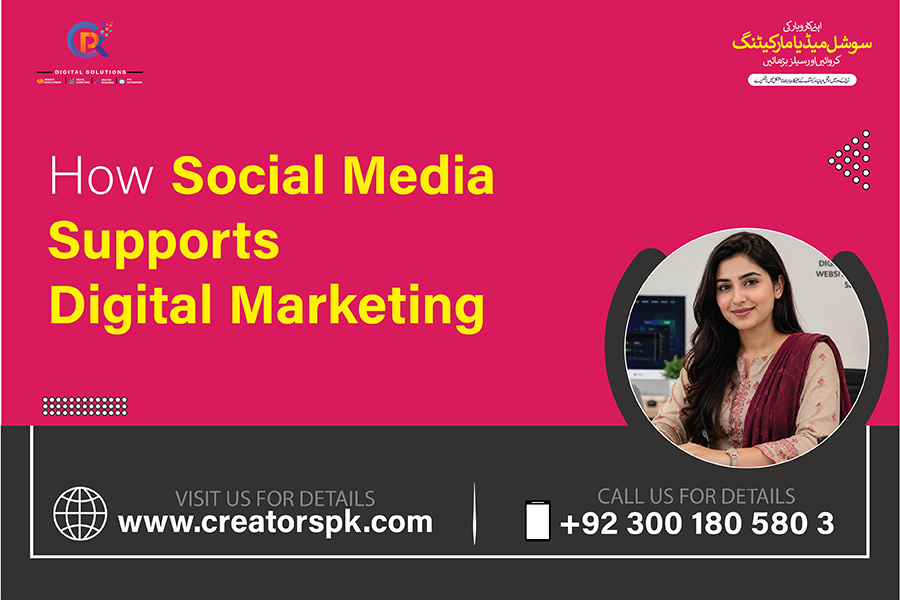
Learn how social media supports digital marketing by increasing brand awareness, engaging customers, distributing content, generating leads, building communities, and driving traffic to websites and online stores.
Book Demo Contact Us Read MoreWebsite Development | SEO | Digital Marketing | Branding
Get Free Consultation